
MUD TESTING EQUIPMENT
For years, Inmotion Energy has supplied
precision instruments and drilling tools for
testing drilling fluids, well cements, and
completion fluids.
From our Bangalore facility, we provide
customers across India and the Middle East
with quality products and exceptional
service.
INDUSTRIES WE SERVE
— Onshore & offshore drilling contractors
— National & independent oil companies
— Mud engineering & testing laboratories
— Well completion & workover operations
WHY CHOOSE US
— Rigorous quality control on every unit
— Fast turnaround on spares &
replacements
— Field-tested designs, built for uptime
INMOTION ENERGY (OPC) PRIVATE LIMITED
- 186, 1st Main Road, Vijaya Bank Layout, Bilekahalli, Bangalore, Karnataka – 560076
- Phone: +91 96637 44619
- info@inmotionenergy.in
- imotion.in
PRODUCT SPECIFICATION — Rig Lab Field Kit (Model F1 Case)
Model: IM-RLK-F1 Compliance / target standard: All-In-One Rig Deployment
Rig Lab Field Kit (Model F1 Case)
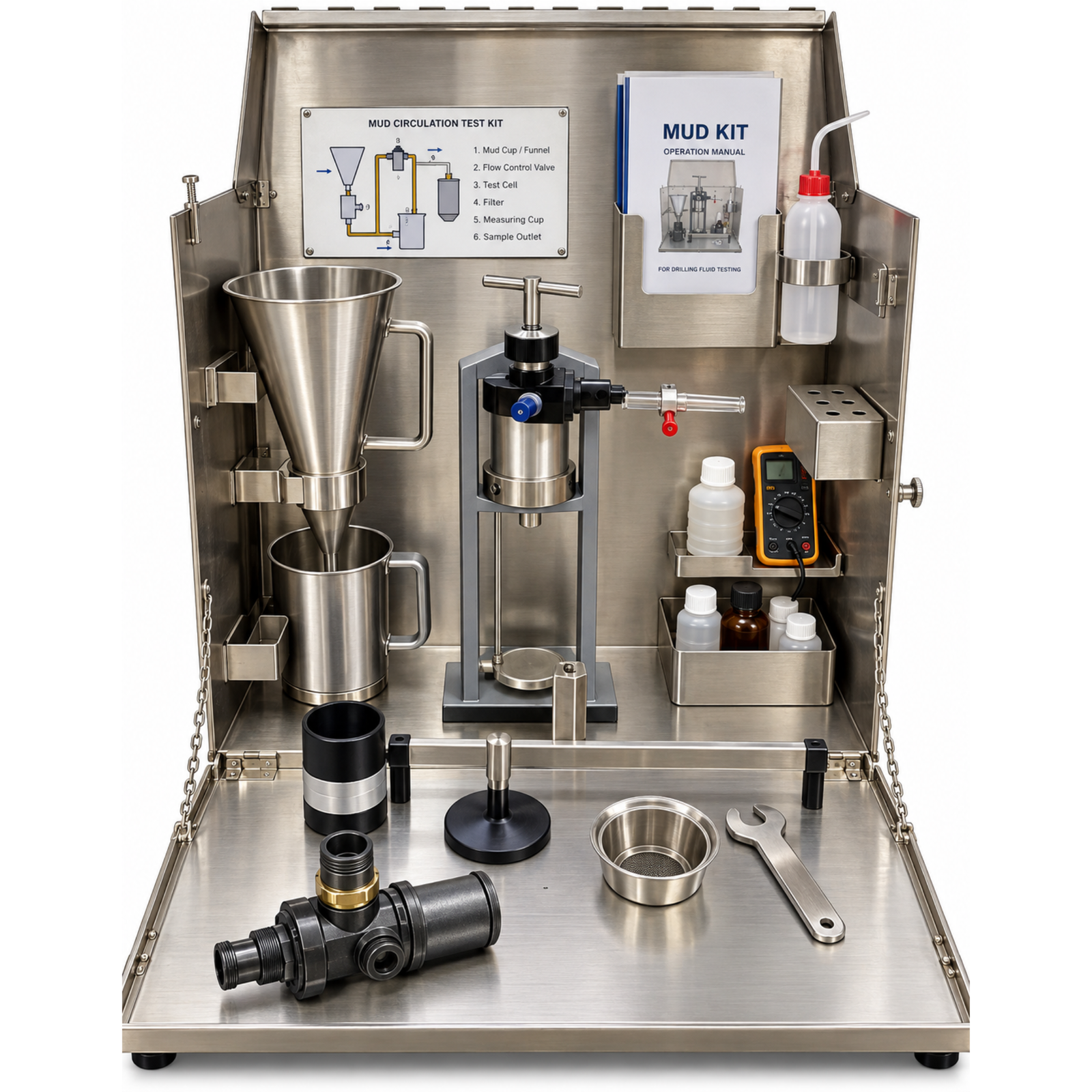
Figure 16. Reference photograph of the Rig Lab Field Kit (Model F1 Case), open to show the full instrument and accessory layout. Components are listed on page 2.
Intended applications
• Daily mud reports at the wellsite: density, viscosity, filtrate, pH, sand and chemistry.
• Field checks on incoming mud and treatment results.
• Emergency testing when the rig laboratory is not accessible.
• Training and demonstration of API field tests.
FEATURES
• All-in-one rugged case with fitted compartments.
• Covers physical and basic chemical tests.
• Instruments arranged for quick access and secure transport.
• Suitable for onshore and offshore deployment.
• Consumables and spare parts in the case.
TECHNICAL SPECIFICATIONS
| Mud density | Mud balance (lb/gal, SG or lb/ft3) |
| Funnel viscosity | Marsh funnel and cup; water 26 +/- 0.5 s per quart at 70 F |
| Rheology | Viscometer (6-speed / equivalent): PV, YP, gels |
| Filtration | API filter press, 100 psi, 30 min |
| Sand content | 200-mesh sieve set |
| Chemistry | pH, alkalinity, chloride and hardness titration reagents |
| Case | Rugged transit case |
Main components (see Figure 1)
| No. | Component |
| 1 | Mud balance |
| 2 | Marsh funnel |
| 3 | Sand content tube and sieve |
| 4 | Filter press cell |
| 5 | Viscometer |
| 6 | Reagent bottles |
Principle of operation
Basic operating procedure
1. Take a fresh mud sample from the flow line or suction tank; record temperature.
2. Measure density with the mud balance and funnel viscosity with the Marsh funnel.
3. Measure rheology on the viscometer at the standard speeds; calculate PV, YP and gels.
4. Set up the filter press, run the 30-minute test and record filtrate and cake.
5. Determine sand content and pH; titrate for alkalinity, chloride and hardness.
6. Record all results in the mud report; clean and repack all instruments.
Calibration and maintenance
• Check mud balance calibration with fresh water (8.33 lb/gal) daily.
• Verify funnel time with fresh water regularly.
• Replace reagents, filter papers and O-rings before they run out.
• Clean and dry instruments after each use and check the case for missing parts.
Safety precautions
• Handle chemicals per SDS; use gloves and eye protection.
• Depressurise the filter press before opening.
• Keep reagents secured and labelled in the case.
Reference sources
• API RP 13B-1 / ISO 10414-1, Field Testing of Water-Based Drilling Fluids
• API RP 13B-2 / ISO 10414-2 (oil-based fluids)
• OFITE and Fann rig-site test kit literature