
MUD TESTING EQUIPMENT
For years, Inmotion Energy has supplied
precision instruments and drilling tools for
testing drilling fluids, well cements, and
completion fluids.
From our Bangalore facility, we provide
customers across India and the Middle East
with quality products and exceptional
service.
INDUSTRIES WE SERVE
— Onshore & offshore drilling contractors
— National & independent oil companies
— Mud engineering & testing laboratories
— Well completion & workover operations
WHY CHOOSE US
— Rigorous quality control on every unit
— Fast turnaround on spares &
replacements
— Field-tested designs, built for uptime
INMOTION ENERGY (OPC) PRIVATE LIMITED
- 186, 1st Main Road, Vijaya Bank Layout, Bilekahalli, Bangalore, Karnataka – 560076
- Phone: +91 96637 44619
- info@inmotionenergy.in
- imotion.in
PRODUCT SPECIFICATION — Hand-Operated Centrifuge (10 ml)
Model: IM-CEN-SY2 Compliance / target standard: ASTM D96 / Quick Field Test
Hand-Operated Centrifuge (10 ml)
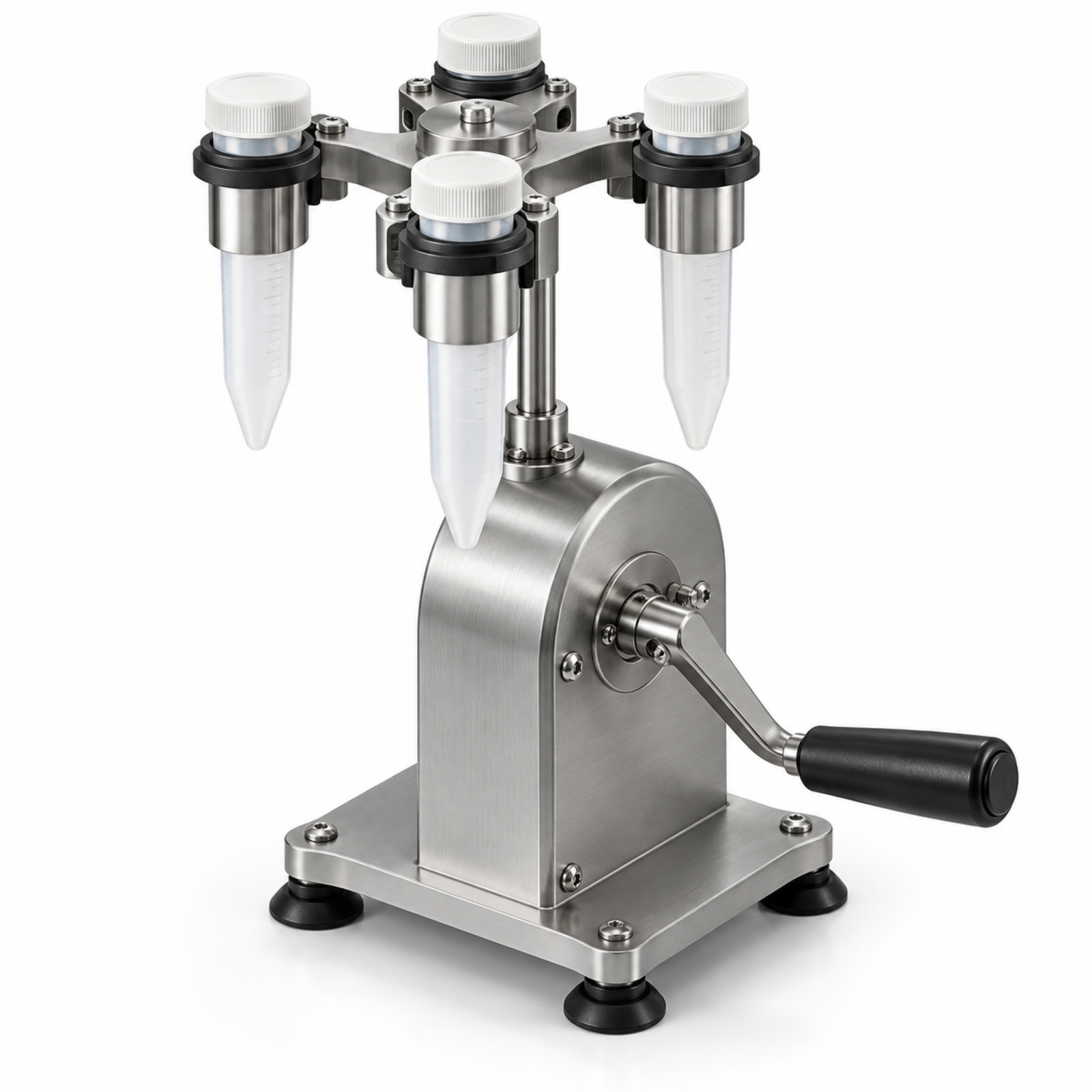
Figure 7. Hand-Operated Centrifuge (10 ml) (reference photograph). Components are listed on page 2.
Intended applications
• Rapid check of water and sediment in oil-based mud filtrate or base oil.
• Field estimate of solids content in small fluid samples.
• Checking oil/water separation of emulsions and returns.
• Backup for a bench centrifuge when power is unavailable.
FEATURES
• Four-place rotor for 10 mL graduated conical tubes with screw caps (two or four tubes can be run).
• Manual crank with gear multiplier; no electricity required.
• Heavy base plate with rubber feet for stable operation on a bench.
• Lightweight and portable.
• Simple construction with few wearing parts.
TECHNICAL SPECIFICATIONS
| Drive | Manual crank with gear train |
| Capacity | Up to 4 x 10 mL graduated conical screw-cap tubes |
| Speed | Operator dependent; keep cranking rate constant for repeatability |
| Mounting | Base plate with rubber feet |
| Result | Volume of separated phase or sediment, mL or % |
| Typical Use | Quick field test |
| Materials | Metal body, glass tubes |
Main components (see Figure 7)
| No. | Component |
| 1 | Crank handle |
| 2 | Gear housing |
| 3 | Rotor arm |
| 4 | 10 mL tubes |
| 5 | Base plate with feet |
Principle of operation
Basic operating procedure
1. Place the centrifuge on a stable bench where the crank can turn freely.
2. Fill the tubes with equal volumes of sample and screw on the caps; load them in opposite positions (2 or 4
tubes) to balance the rotor.
3. Place the tubes in the arms and check that they swing freely.
4. Turn the crank at a steady, fast rate for the specified time (for example 5 minutes).
5. Stop, allow the rotor to come to rest, remove the tubes and read the separated volumes.
6. Repeat if the reading is still changing; record the result and clean the tubes.
Calibration and maintenance
• Lubricate gears and bearings with light grease as per the manual.
• Inspect tube holders and rotor for cracks and wear.
• Replace chipped or cracked tubes.
• Keep clean and dry; store covered.
Safety precautions
• Always load tubes in opposite pairs so the rotor is balanced; never run with a single tube.
• Keep hands and clothing away from the moving rotor.
• Wear eye protection when centrifuging hydrocarbon samples.
Reference sources
• ASTM D96, water and sediment in crude oil by centrifuge (field procedure); note: this method has been withdrawn/superseded –
confirm the current standard (e.g. ASTM D4007 / API MPMS Ch. 10.4)
• API RP 13B-2 / ISO 10414-2, Field Testing of Oil-Based Drilling Fluids (retort / water content)
• OFITE / Fann centrifuge product literature