
MUD TESTING EQUIPMENT
For years, Inmotion Energy has supplied
precision instruments and drilling tools for
testing drilling fluids, well cements, and
completion fluids.
From our Bangalore facility, we provide
customers across India and the Middle East
with quality products and exceptional
service.
INDUSTRIES WE SERVE
— Onshore & offshore drilling contractors
— National & independent oil companies
— Mud engineering & testing laboratories
— Well completion & workover operations
WHY CHOOSE US
— Rigorous quality control on every unit
— Fast turnaround on spares &
replacements
— Field-tested designs, built for uptime
INMOTION ENERGY (OPC) PRIVATE LIMITED
- 186, 1st Main Road, Vijaya Bank Layout, Bilekahalli, Bangalore, Karnataka – 560076
- Phone: +91 96637 44619
- info@inmotionenergy.in
- imotion.in
PRODUCT SPECIFICATION — 12-Speed Electronic Viscometer
Model: IM-RV-D12E Compliance / target standard: API / ASTM Rheology Model
12-Speed Electronic Viscometer
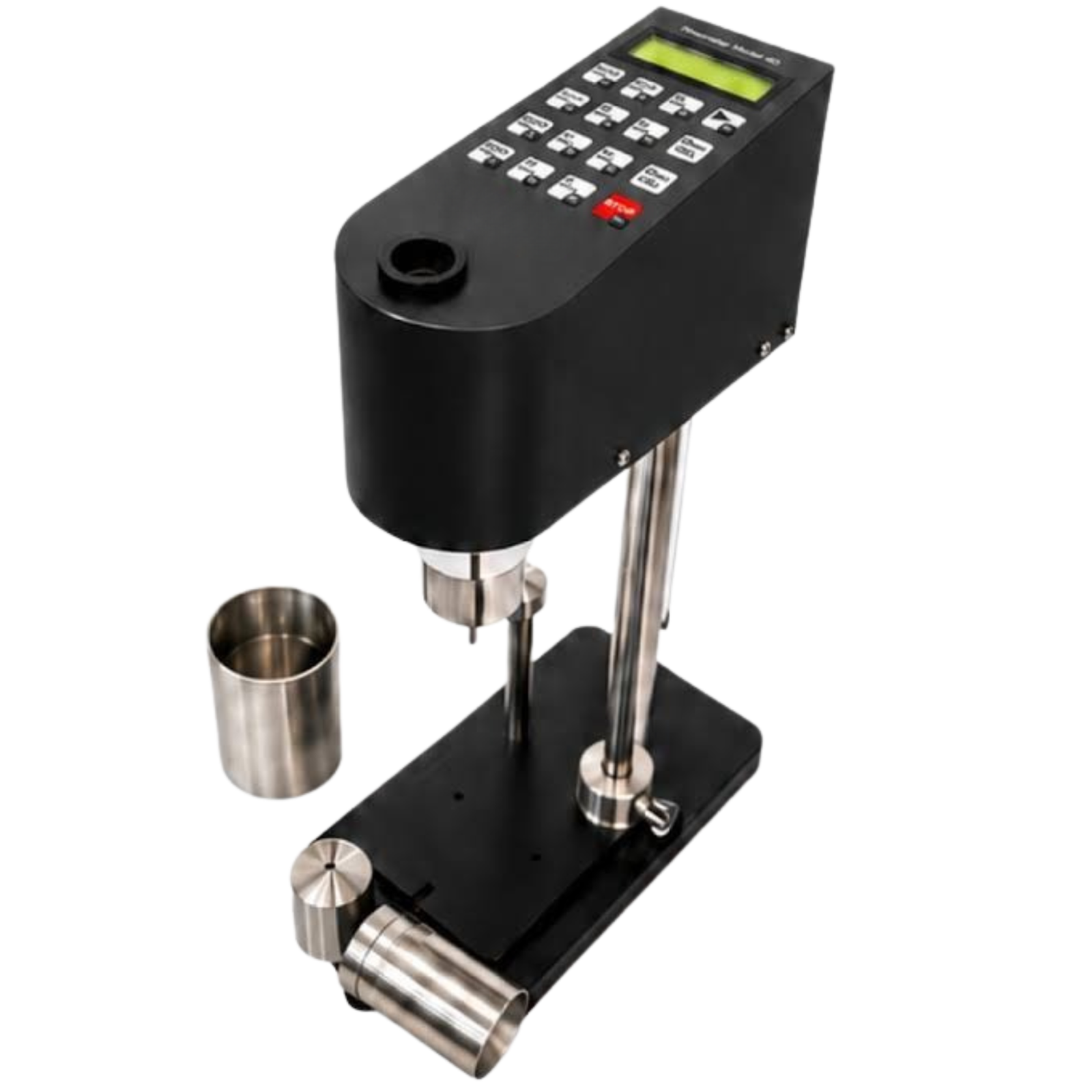
Figure 1. 12-Speed Electronic Viscometer (reference photograph). Components are listed on page 2.
Intended applications
• Routine mud checks: plastic viscosity (PV), yield point (YP) and 10-second / 10-minute gel strengths per API RP
13B-1.
• Low-shear-rate readings (6, 3, 2 and 1 rpm) for hole-cleaning and barite-sag assessment.
• Fitting Bingham, Power-Law and Herschel-Bulkley models for hydraulics programs (API RP 13D).
• Formulation comparison in R&D and batch quality control.
FEATURES
• Twelve selectable speeds: 1, 2, 3, 6, 10, 20, 30, 60, 100, 200, 300 and 600 rpm.
• Standard R1 rotor / B1 bob / F1 torsion-spring geometry for direct API-compatible readings.
• Electronic speed regulation for constant shear rate under varying load.
• Compatible with a thermostatic heated cup for tests up to about 200 F (93 C).
• Height-adjustable sample platform with lock knob and scribed immersion line.
TECHNICAL SPECIFICATIONS
| Measuring Principle | Coaxial cylinder, rotating outer sleeve |
| Test Speeds (rpm) | 1, 2, 3, 6, 10, 20, 30, 60, 100, 200, 300, 600 |
| Shear Rate | 1.703 × rpm (1/s) with R1-B1 geometry |
| Rotor R1 / Bob B1 Radius | 18.415 mm / 17.245 mm; bob length 38.0 mm |
| Torsion Spring F1 | 386 dyne-cm per degree of deflection |
| Sample Volume | Approx. 350 mL (to cup scribe line) |
| Test Temperature | Ambient up to about 200°F (93°C) with heated cup (option) |
Main components (see Figure 1)
| No. | Component |
| 1 | Readout display (dial / digital) |
| 2 | Speed selector switch |
| 3 | Rotor sleeve and bob |
| 4 | Sample cup |
| 5 | Adjustable platform and lock knob |
| 6 | Base and support column |
Principle of operation
Basic operating procedure
1. Stir the sample, fill the cup to the scribe line and record the sample temperature.
2. Raise the platform until the rotor is immersed exactly to its scribe line; lock the platform.
3. Select 600 rpm; wait for a steady reading (typically 10-15 s) and record it.
4. Repeat at 300, 200, 100, 60, 30, 10, 6, 3, 2 and 1 rpm, recording each steady reading.
5. For gel strength: stir at 600 rpm for 10 s, rest 10 s (or 10 min), then run at 3 rpm and record the maximum
deflection.
6. Calculate PV, YP and apparent viscosity; report the test temperature; clean and dry the rotor and bob.
Calibration and maintenance
• Check with certified Newtonian calibration oil at 300 and 600 rpm; re-calibrate if outside the manual’s
tolerance.
• Confirm the dial reads zero with the rotor running in air and inspect bob and sleeve for dents or wear.
• Remove and clean the rotor regularly to prevent scale and polymer build-up.
• Keep the instrument level and covered when not in use.
Safety precautions
• Keep fingers, hair and cables clear of the rotating sleeve.
• Wear gloves and eye protection; heated samples above 50 C can cause burns.
• Handle chemicals per SDS and dispose of used mud in line with site rules.
Reference sources
• API RP 13B-1 / ISO 10414-1, Field Testing of Water-Based Drilling Fluids (rheology section)
• API RP 13D, Rheology and Hydraulics of Oil-Well Drilling Fluids
• OFITE Model 800/900 series viscometer literature and instruction manuals
• Fann Model 35 viscometer manual; AMETEK Brookfield BF35 Manual M13-10000 (Installation, Operation and Maintenance)